
Fiona & Sandra's Wise Woman's Blog...
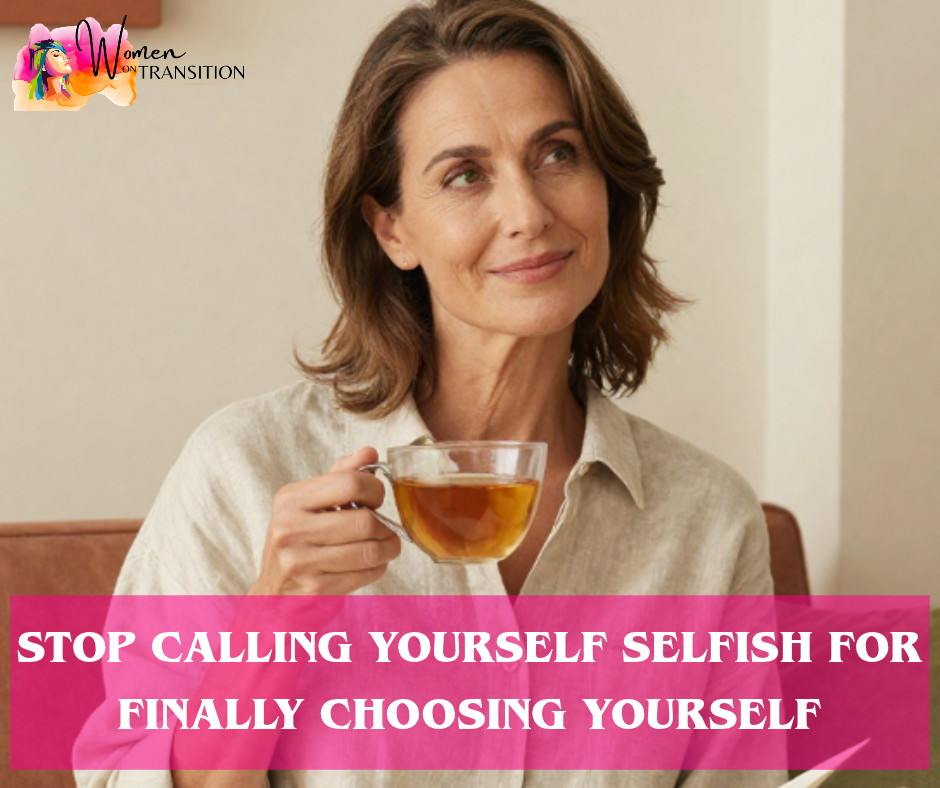
Stop Calling Yourself Selfish for Finally Choosing Yourself
Have you ever made a decision that was right for you, only to spend the next few days feeling guilty about it?
Perhaps you declined a family commitment because you needed rest.
Maybe you told a friend you couldn't keep listening to the same problem without any change.
Or perhaps, after years of putting your marriage and family first, you finally decided to do something that made you happy.
And then the familiar voice appeared.
"Am I being selfish?"
"Shouldn't I be doing more?"
"What will everyone think?"
Let's challenge that belief.
Choosing yourself is not the same as disregarding everyone else.
But many women have spent so long confusing the two that they struggle to tell the difference.
How Women Learn to Put Themselves Last
From childhood, many girls receive praise for being helpful, considerate and accommodating.
These are valuable qualities.
However, when a woman learns that being good means keeping everyone happy, she may begin treating her own needs as less important than everyone else's.
She becomes the person who adjusts.
The one who compromises.
The one who understands.
Over time, this can become so automatic that she feels guilty simply for having preferences.
She might even believe that a healthy woman should be able to manage everything without complaining.
But emotional maturity doesn't mean having no needs.
It means recognising your needs and communicating them responsibly.
Why Divorce Can Change Your Perspective
A major life transition often forces you to reconsider how you've been living.
You may begin asking questions you haven't allowed yourself to ask for years.
Am I happy?
What have I sacrificed?
What do I want the next twenty years of my life to look like?
These questions can feel uncomfortable, particularly if other people have become accustomed to you being endlessly available.
When you change, the people around you may need time to adjust.
Your new boundaries might disappoint someone who benefited from your old lack of boundaries.
That doesn't automatically mean you're doing something wrong.
Selfishness Versus Self-Respect
There is an important distinction here.
Selfishness disregards the legitimate needs and rights of others.
Self-respect acknowledges that your needs matter, too.
You can care about your family while making time for yourself.
You can love your adult children without solving every problem for them.
You can be compassionate towards a former partner without allowing them to dictate your future.
And you can build a happy life after divorce without apologising for experiencing joy.
Healthy relationships make room for more than one person's needs.
A Practical Way to Start Choosing Yourself
The next time you feel guilty about a decision, pause and ask:
Am I genuinely hurting someone, or are they simply disappointed that I said no?
Am I acting against my values, or am I breaking an old habit of pleasing everyone?
Would I judge a woman I love for making this same decision?
That last question can be particularly revealing.
Many women extend compassion to everyone except themselves.
You deserve the same consideration you give others.
Your Life Is Not an Endless Obligation
You have spent years learning how to be a good partner, mother, friend, daughter or colleague.
Now you have an opportunity to learn something equally important.
How to be a good friend to yourself.
You don't have to become less caring.
You simply need to stop excluding yourself from your own care.
You can love other people deeply without making yourself the last person on your priority list.
If you're ready to release people-pleasing, strengthen your self-worth and create a life that reflects what truly matters to you, discover how we can help:
https://womenontransition.com/links
Fiona May and Sandra Lee x
Divorce Recovery & Life Transition Coaches
Women on Transition