Fiona & Sandra's Wise Woman's Blog...
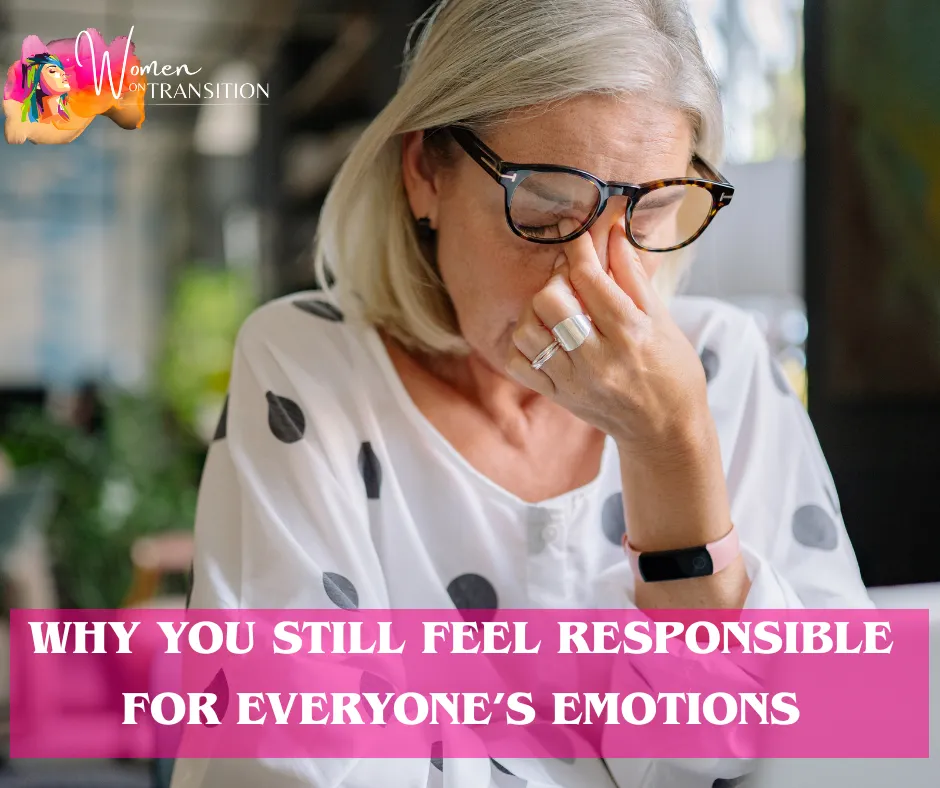
Why You Still Feel Responsible for Everyone’s Emotions
Many women carry this invisible job description.
They don’t consciously choose it.
They simply inherit it.
The role sounds like:
Keep the peace.
Smooth things over.
Manage tension.
Make sure everyone feels okay.
And over time…
It becomes automatic.
How This Pattern Develops
For many women, emotional responsibility begins early.
You may have learned that being:
Easygoing
Helpful
Emotionally accommodating
Created safety.
You learned to read rooms.
Notice moods.
Anticipate reactions.
Adjust yourself accordingly.
In long marriages, this pattern often intensifies.
You become the regulator.
The emotional organiser.
The person quietly holding everything together.
Why Divorce Often Exposes This Pattern
After separation, many women suddenly realise:
"I’ve spent years managing everybody else’s emotional experience."
You monitored:
His mood.
His stress.
The children’s feelings.
Family harmony.
And somewhere inside all of that…
Your own emotional reality became secondary.
The Hidden Cost
Being hyper-responsible for everyone’s emotions creates exhaustion.
Because you’re attempting something impossible.
You cannot regulate everyone else’s internal world.
And yet many women continue trying.
Out of love.
Habit.
Fear of conflict.
Fear of disappointing people.
The Belief That Needs Questioning
Many women unconsciously believe:
“If someone is upset, I must have done something wrong.”
That belief quietly creates:
People-pleasing.
Over-explaining.
Boundary difficulty.
Chronic anxiety.
The Emotional Shift Toward Freedom
Instead of asking:
"How do I keep everyone comfortable?"
Try asking:
“What belongs to me… and what belongs to them?”
That question is powerful.
Because healthy emotional boundaries do not mean becoming cold.
They mean becoming differentiated.
You can care deeply…
Without carrying responsibility for everyone else’s feelings.
What Emotional Maturity Actually Looks Like
Mature emotional relating sounds more like:
"I am responsible for how I show up."
"I am not responsible for controlling everyone’s reactions."
That shift can feel uncomfortable at first.
Especially for women conditioned to manage emotional harmony.
But over time…
It creates extraordinary freedom.
If you’re tired of carrying everyone else’s feelings, walking on eggshells, or losing yourself trying to keep the peace…
Learning healthy emotional boundaries can be life-changing.
Explore how we support women to strengthen self-worth, emotional intelligence and self-led living after separation and divorce: https://womenontransition.com/links
Fiona May and Sandra Lee x
Divorce Recovery & Life Transition Coaches
Women on Transition