Fiona & Sandra's Wise Woman's Blog...
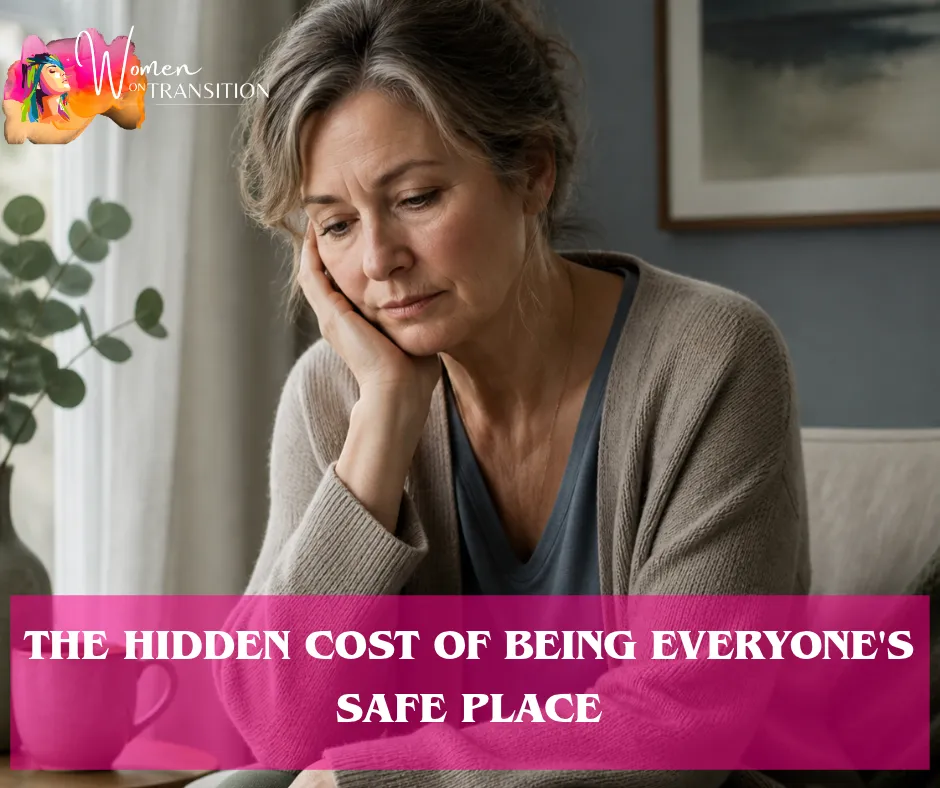
The Hidden Cost of Being Everyone's Safe Place
Are you the woman everyone turns to when life gets difficult?
The friend who always listens.
The mother who holds the family together.
The sister who offers advice.
The colleague who solves problems.
You're the person people trust because you're dependable, compassionate and strong.
But let me ask you something.
When everyone else needs somewhere to fall, where do you go when you need to fall apart?
Many midlife women have spent decades becoming the emotional support system for everyone around them. They are so practised at caring for others that they barely notice when their own emotional needs go unmet.
And after separation or divorce, this pattern can become even more exhausting.
When Being Needed Becomes Your Identity
For some women, being needed is closely connected to feeling valued.
You feel important when someone asks for your help.
You feel loved when someone depends on you.
You feel secure when you know you make a difference in someone else's life.
There is nothing wrong with being generous. Supporting the people we love is part of healthy connection.
The difficulty arises when being useful becomes the primary way you experience your worth.
Without realising it, you may begin believing:
"If I'm not helping, what do I contribute?"
"If I stop being available, will people still want me around?"
"If I put myself first, will they think I'm selfish?"
These beliefs can keep you trapped in a cycle of over-giving, exhaustion and resentment.
Why This Pattern Can Become Stronger After Divorce
When a long relationship ends, your identity can feel unsettled.
You may no longer have the role of wife or partner that organised so much of your daily life.
Being needed by your adult children, friends or family can provide a familiar sense of purpose.
You know how to be the strong one.
You know how to solve problems.
You know how to look after everyone else.
But do you know how to let someone look after you?
Sometimes, being everyone's safe place becomes a way of avoiding the vulnerability of admitting that you need support, too.
The Difference Between Generosity and Over-Giving
Healthy generosity comes from choice.
You help because you want to, and you can recognise when you need to step back.
Over-giving comes with an emotional cost.
You say yes when you're exhausted.
You listen when you have nothing left to give.
You solve problems that belong to other adults because watching them struggle makes you uncomfortable.
Eventually, your generosity stops feeling generous.
It feels like an obligation.
You can be a loving woman without making yourself endlessly available.
How to Begin Changing the Pattern
Start by noticing what happens inside you when someone asks for something.
Do you genuinely want to help?
Or do you immediately feel guilty at the thought of saying no?
Practise pausing before you respond. You might say, "Let me check what I have on before I commit."
Allow other adults to experience their own emotions and solve their own problems when it is appropriate to do so.
And practise receiving help without immediately trying to repay it.
You don't need to earn your place in people's lives by being indispensable.
You Deserve to Be Loved for More Than What You Do
Imagine how different your relationships might feel if you no longer needed to prove your value through constant giving.
You could offer support without resentment.
Rest without guilt.
Say no without fearing rejection.
And allow others to know the woman beneath the capable exterior.
You can be strong and still need support.
You can be independent and still want companionship.
You can be generous without sacrificing yourself.
Your worth is not measured by how much of yourself you give away.
If you're ready to strengthen your boundaries, reconnect with your needs and build a life where your wellbeing matters too, discover how we can help:
https://womenontransition.com/links
Fiona May and Sandra Lee x
Divorce Recovery & Life Transition Coaches
Women on Transition