Fiona & Sandra's Wise Woman's Blog...
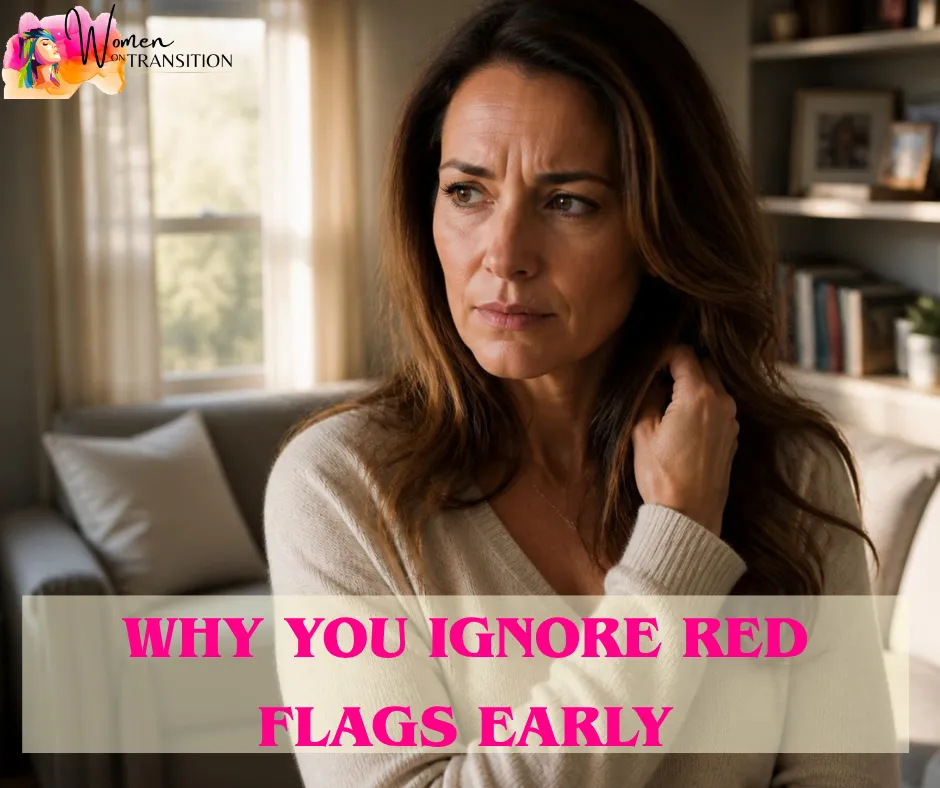
Why You Ignore Red Flags Early
One of the most confronting realisations women have after a relationship ends is this:
"I saw it… I just didn’t act on it."
Not once.
But repeatedly.
And that can feel confusing.
Even painful.
Because it challenges how you see yourself.
But here’s what most women don’t realise:
Ignoring red flags is rarely about not knowing.
It’s about what you were prioritising instead.
Why Red Flags Don’t Always Feel Like Red Flags in the Moment
When you’re emotionally invested in someone…
Your perception shifts.
You don’t evaluate behaviour in isolation.
You evaluate it through hope.
Through potential.
Through emotional connection.
So instead of asking:
"Is this behaviour aligned with me?"
You often ask:
"Is this something we can work through?"
That small shift changes everything.
The Role of Emotional Investment
The more you care…
The more likely you are to rationalise.
Not because you’re naive.
But because connection creates emotional bias.
You begin to:
Explain things away.
Give extra chances.
Focus on their good moments.
And minimise discomfort.
This is not lack of intelligence.
It is attachment in action.
Why This Pattern Is So Common in Long Marriages
In long-term relationships, many women are trained into endurance.
You learn to:
Adapt.
Compromise.
Stay loyal.
Work through things.
So when something doesn’t feel right…
Your instinct is often not to leave.
It’s to fix.
And over time, that becomes your relational blueprint.
The Emotional Conflict Beneath It
Part of you feels the discomfort.
The inconsistency.
The misalignment.
But another part hopes:
"If I just give it time… it will change."
That tension between intuition and hope is where red flags often get ignored.
The Shift That Changes Everything
Instead of asking:
"Why didn’t I see it?"
Ask:
“What was I trying to preserve in that moment?”
Was it:
Connection?
Hope?
Stability?
The idea of the relationship?
Because awareness grows when you stop judging yourself…
And start understanding your patterns.
What Emotionally Intelligent Women Learn
They don’t rely on clarity after attachment forms.
They learn to pay attention earlier.
To their body.
To discomfort.
To inconsistency.
Not to react impulsively…
But to listen earlier.
Because emotional intelligence is not about leaving quickly.
It’s about noticing truth early enough to stay aligned with yourself.
If you're ready to trust your intuition earlier, strengthen your boundaries and stop repeating old relational patterns, discover how we can help:
https://womenontransition.com/links
Your intuition was never wrong — it was just competing with hope.
With love and belief in your next chapter,
Fiona May and Sandra Lee x
Divorce Recovery & Life Transition Coaches
Women on Transition