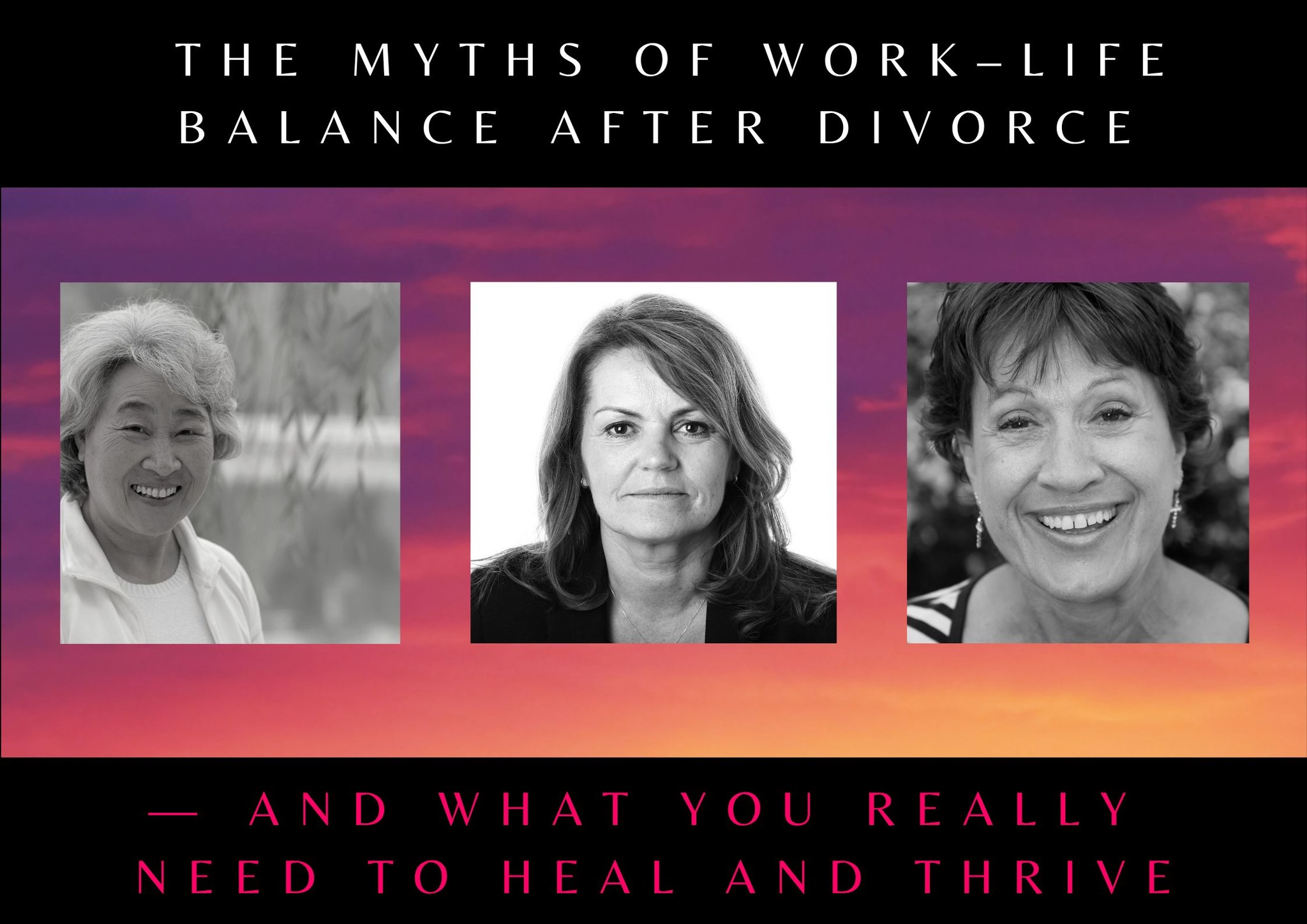
The Myths of Work–Life Balance After Divorce — And What You Really Need to Heal and Thrive
What If “Balance” Isn’t Something You Chase?
Let’s be honest — this idea of work–life balance has been sold to women for decades like some magical formula: if you just organise better, hustle smarter, or meditate longer, everything will finally “balance out.”
But here’s the truth no one tells you:
Balance isn’t something you find — it’s something you build from the inside out.
It begins the moment you stop performing for everyone else and start living in rhythm with yourself.
That’s when calm replaces chaos. That’s when you wake up not already behind.
You don’t need to do more to get balanced.
You need to learn how to be more aware, grounded, and connected to your true self again.
Why “Balance” Feels Impossible After Divorce
When your world has been shaken by divorce, you’re not just reorganising your calendar — you’re rebuilding your identity. You’ve gone from being part of a team to being your own anchor, decision-maker, and emotional support system.
That’s a massive shift.
Let’s break down what’s really happening underneath the surface.
1. You’re Healing an Emotional Earthquake
You can’t “schedule” healing.
Grief, loneliness, guilt, confusion — they rise and fall in waves. And yet, so many women push through, pouring themselves into work, parenting, or endless busyness to outrun the pain.
But healing requires stillness. It requires feeling.
The truth is: you can’t find balance when you’re sprinting from your emotions. You find it when you learn to regulate your nervous system, calm your mind, and meet your feelings with compassion rather than avoidance.
Here's A FREE Tool:
Try my 3-Minute Grounding Reset
Place your hand on your heart.
Breathe deeply and say, “Right now, I am safe.”
Name three things you’re grateful for in this moment.
That slight pause tells your body it’s okay to rest — and that’s where emotional recovery begins.
2. You’re Carrying the Weight of Two Lives
Divorce often doubles the load. You become CEO of your household, CFO of your finances, and COO of your kids’ schedules — all while trying to rebuild your future.
But here’s the secret: You’re not failing. You’re simply human.
Mindset Shift: You don’t need to “do it all.” You need to decide what truly matters — and let the rest go.
This isn’t about time management; it’s about energy management.
Ask yourself: “What drains me?” and “What restores me?”
Then, commit to giving at least as much attention to the second list as you do to the first.
3. You’re Still Learning Boundaries
Boundaries are not walls — they’re protection for your peace.
After a divorce, many women overcompensate. We want to prove we can handle everything, say yes to everyone, and keep every plate spinning. But that constant output leaves you resentful, exhausted, and disconnected.
Use a Self-Preserving Practice:
Every “yes” should be backed by desire, not guilt.
If it’s not a full-body yes, it’s a no.
Saying no doesn’t make you selfish — it makes you self-respecting.
4. You’re Redefining Who You Are
Your old life script is gone.
And while that’s terrifying, it’s also your greatest gift.
This is your opportunity to create a new rhythm — one based on what matters now, not what used to.
Most women try to “balance” without clarity. They’re juggling everything but haven’t stopped to ask:
“Do I even want all these balls in the air?”
You can’t create balance around a life that no longer fits you.
You have to first redesign the life — then balance will naturally follow.
What’s Really Missing When You Feel Off-Balance
When you peel back the layers, balance isn’t about time at all — it’s about alignment.
And alignment comes when five core pieces fall into place.
1. Clarity
You must know what matters most. Without clarity, everything feels urgent and nothing feels satisfying.
Ask yourself:
What are my top three priorities this season?
What do I want my days to feel like, not just look like?
The more precise you are, the calmer you’ll feel.
2. Rest
You can’t think clearly when your nervous system is overloaded.
Sleep, silence, nature, breathing — these are not luxuries. They are non-negotiables for emotional recovery.
Remember: Rest is the reset button for your mind and spirit.
3. Connection
Healing happens in safe spaces — not isolation.
When you’re surrounded by women who get it, who’ve cried the same tears and rebuilt from the same rubble, something inside you exhales.
That’s why community matters so deeply in the post-divorce growth cycle.
You need to witness other women thriving to remind yourself that you can too.
4. Permission to Be Imperfect
Perfection is the enemy of peace.
Balance doesn’t mean equal attention — it means intentional attention.
Some days your focus will be work, others your kids, others simply you.
Give yourself permission to drop the ball on things that don’t matter and rest in the knowledge that your worth isn’t measured by your productivity.
5. New Tools for a New Life
To create real balance, you can’t rely on your old coping strategies — they belong to your old identity.
You need emotional intelligence tools that teach you how to self-regulate, reframe, and rebuild from a place of strength.
That’s why I teach women the skills no one ever gave us growing up — how to manage thoughts, communicate boundaries, calm anxiety, and consciously create what’s next.
Because balance is built — one conscious thought, one boundary, one moment of grace at a time.
The New Definition of Balance
Balance isn’t a static state. It’s a living practice.
It’s knowing when to rest and when to rise.
It’s honouring your emotions but not letting them define you.
It’s creating a life that feels like you.
So, let’s drop the myth that balance is perfection — and embrace the truth:
Balance is presence.
When you’re in rhythm with yourself, your whole life begins to flow with more peace, purpose, and ease.
Final Thoughts
If you’re tired of surviving and ready to start thriving, it’s time to stop chasing balance and start building emotional alignment.
Learn new tools.
Surround yourself with conscious women.
Rebuild your mind as much as your life.
You don’t need to prove you’re strong anymore — you already are.
Now it’s about learning how to live from that strength with grace, clarity, and self-love.
Because balance isn’t about holding everything together.
It’s about learning to hold yourself — with compassion, courage, and power.
By Fiona May, Divorce Recovery and Life Transition Coach